World's First Artificial Rain, world record set by Ștefania Mărăcineanu
Baragan, Romania--Ștefania Mărăcineanu amazed the world with the creation of the world's first artificial rain—another of her discoveries, made possible through the use of radioactive salts, which artificially triggered local precipitation in the Bărăgan region, Romania. in 1931. according to the WORLD RECORD ACADEMY.
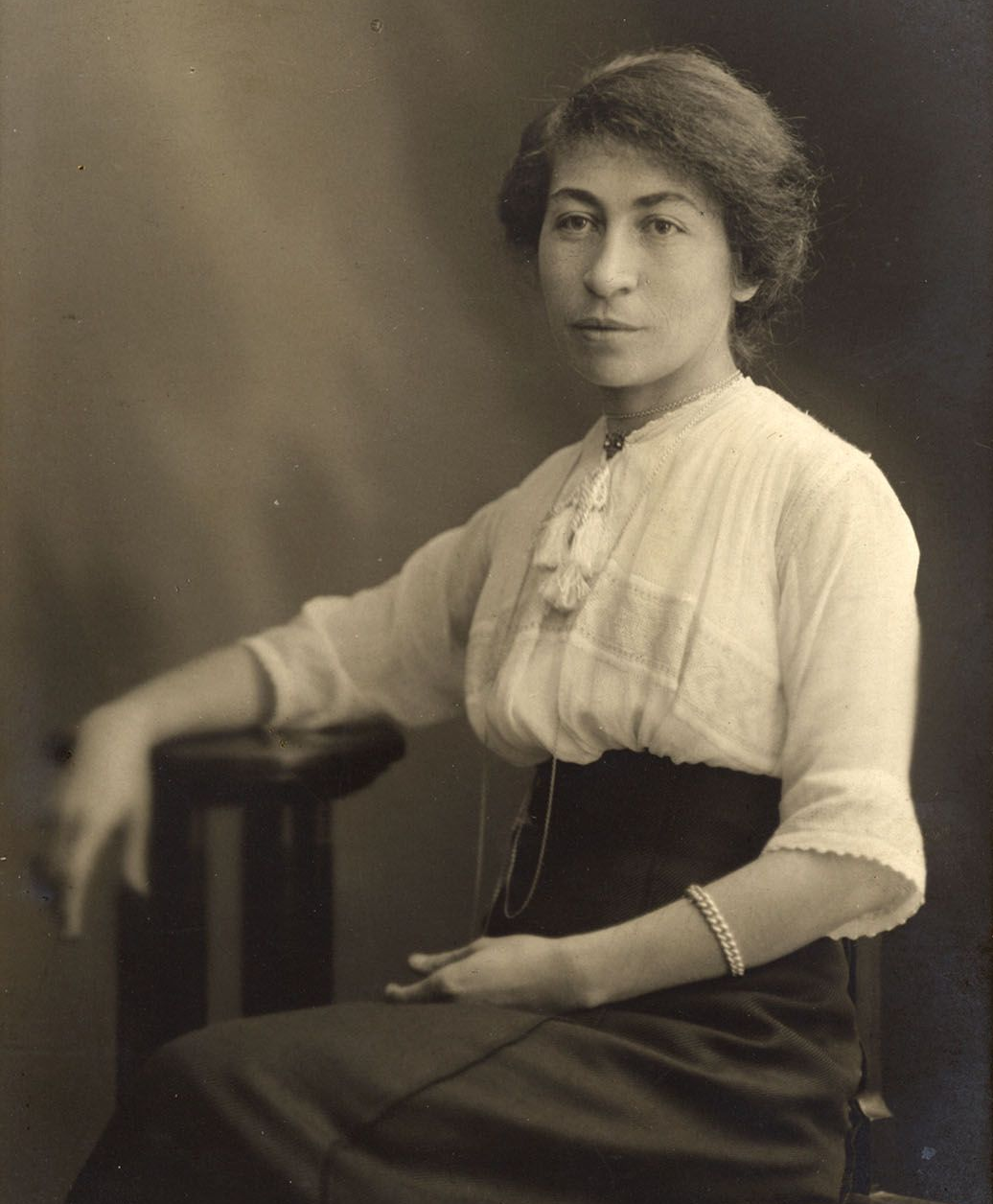
Photo: Romanian postcard from 1913. The person depicted in the photo is ro:Ștefania Mărăcineanu. Author: Adolf Klingsberg (1880–1978)/ (Julietta studio)/ Wikipedia
"A true luminary of global science, few Romanians today know who Ștefania Mărăcineanu—a physicist and chemist—was. Born in Bucharest, her name is linked to artificial radioactivity as well as the world's first artificial rain. Yet, as magnificent as her discoveries were, the recognition accorded to this Romanian scientist—who worked in the Paris laboratory of the famous Marie Curie—was equally insignificant," says the Galenus Magazine.
"The World's First Artificial Rain
Ștefania Mărăcineanu also amazed the world with the creation of the first artificial rain—another of her discoveries. This was made possible through the use of radioactive salts, which artificially triggered local precipitation in the Bărăgan region in 1931. She continued her research into this phenomenon in Algeria, receiving support from the French government."
"It was her great passion—science—that ultimately led to her death; she most likely developed cancer due to radiation exposure.
"Back home in Bucharest, the woman who ought to be recognized as Romania's greatest female physicist and chemist passed away on August 15, 1944, at the age of just 62. As a tribute to her, the Curie Museum in Paris houses the original chemistry laboratory from the Radium Institute where Ștefania Mărăcineanu worked.
"Ștefania Mărăcineanu; June 18, 1882 – August 15, 1944) was a Romanian physicist. She worked with Marie Curie and studied polonium, which was named for Curie's homeland. She made proposals that later lead to Irène Joliot-Curie's Nobel Prize. Mărăcineanu believed that Joliot-Curie had taken her work on induced radioactivity to receive the prize." (Wikipedia)
"She was born in Bucharest, the daughter of Sebastian Mărăcineanu[3] and Sevastia, both 20 years old. Not much is known about her personal life. She completed high school at the Central School for Girls in her native city. In 1907, she enrolled at the University of Bucharest, and received her degree in physical and chemical sciences in 1910.
"Her senior thesis, titled Light interference and its application to wavelength measurement, earned her a 300 lei prize. After graduation, she taught at high schools in Bucharest, Ploiești, Iași, and Câmpulung. In 1915, she secured a teaching position at the Central School for Girls in Bucharest ,a position she held until 1940."
"Mărăcineanu went on to work at the Paris Observatory until 1929, after which she returned to Romania, and started teaching at the University of Bucharest. She performed experiments investigating the link between radioactivity and rainfall, and rainfall with earthquakes."
"Rainmaking, also known as artificial precipitation, artificial rainfall and pluviculture, is the act of attempting to artificially induce or increase precipitation, usually to stave off drought or the wider global warming,"says Wikipedia.
"According to the clouds' different physical properties, this can be done using airplanes or rockets to sow to the clouds with catalysts such as dry ice, silver iodide and salt powder, to make clouds rain or to increase precipitation, to remove or mitigate farmland drought, to increase reservoir irrigation water or water supply capacity, to increase water levels for hydropower generation, or even to solve the global warming problem.
"In the United States, rainmaking was attempted by traveling showmen. It was practiced on the American frontier, but may have reached a peak during the Dust Bowl drought of the Western United States and the Midwestern United States in the 1930s. The practice was depicted in the 1956 film The Rainmaker. Attempts to bring rain directly have waned with the development of meteorology, laws against fraud, and improved weather forecasting, with some exceptions such as cloud seeding and forms of prayer including rain dances, which are still practiced today."